Container Farming 101: Can You Really Grow Food Year-Round in a Box?
Container Farming 101: Can You Really Grow Food Year-Round in a Box?
Post Tags:
| QUICK ANSWER
✓ A single 40ft hydroponic container can produce roughly 3–5 tons of leafy greens, herbs, and microgreens per year — output that would normally need a quarter to half an acre of field. ✓ A 320-square-foot container unit can hold 4,000–8,000 plants at once, using up to 90% less water than soil-based farming. ✓ Startup cost ranges from around $15,000 for a basic DIY hydroponic build to $180,000 for a fully turnkey commercial unit. ✓ Typical ROI lands around 18–24 months, depending heavily on local crop prices and what you choose to grow. |
Growing food inside a metal shipping container sounds like a novelty until you look at the numbers: a single container can out-produce a small field, using a fraction of the water, regardless of season or outdoor climate. Container farming has moved from experimental agtech projects into a real commercial category, with the container-based slice of the vertical farming market estimated at roughly $15.8 billion globally in 2025 and growing at a double-digit annual pace. This guide covers how container farms actually work, what they cost at different scales, and how to judge whether the economics make sense for your situation.
What Is a Container Farm?
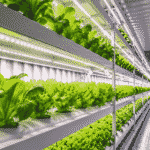
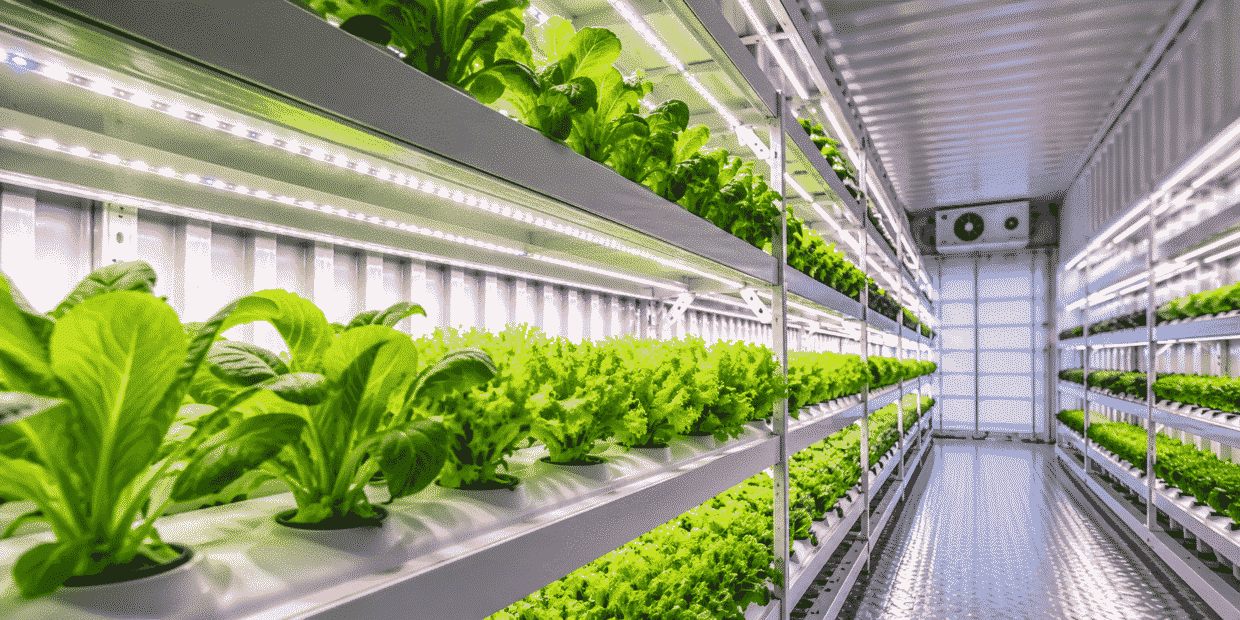
A container farm is a shipping container retrofitted with a hydroponic or aeroponic growing system — meaning plants grow in a nutrient-rich water solution or fine mist rather than soil — combined with LED grow lighting, climate control, and often automated irrigation and monitoring. Because every variable (light, temperature, humidity, nutrients) is controlled inside a sealed box, a container farm can produce consistent yields year-round, regardless of outdoor weather, drought, or growing season, in a footprint of around 320 square feet.
How Much Can a Container Farm Actually Produce?
Yield is the number that surprises most people the first time they see it. A single 40-foot container converted to vertical hydroponics can produce roughly three to five tons of leafy greens, herbs, and microgreens per year — output that would normally require a quarter to a half acre of open field. At the plant level, a 320-square-foot unit can hold between 4,000 and 8,000 plants at any given time, cycling through multiple harvests per year rather than the one or two a traditional outdoor season allows.
| Metric | Container Farm | Traditional Field Farming |
| Land footprint for comparable yield | ~320 sq ft (one container) | Quarter to half an acre |
| Water use | Up to 90% less than soil-based methods | Baseline |
| Growing seasons per year | Year-round, weather-independent | Typically 1–2 seasons, climate-dependent |
| Yield predictability | High — fully controlled environment | Variable — weather, pests, drought risk |
What Does a Container Farm Cost?
Startup cost varies enormously depending on how much of the system you build yourself versus buy pre-engineered. A basic DIY hydroponic container build can start around $15,000 for someone with the technical skill to source and install their own racking, lighting, and irrigation. A fully turnkey commercial unit — pre-built, tested, and ready to plant on delivery — can run up to roughly $180,000, depending on automation level, lighting quality, and climate control sophistication.
| Build Type | Typical Cost | What You Get |
| DIY / self-sourced build | From ~$15,000 | Basic racking, lighting, and irrigation you assemble and calibrate yourself |
| Mid-tier semi-turnkey unit | $40,000–$100,000 | Pre-installed core systems with some customization required on-site |
| Fully turnkey commercial farm | Up to ~$180,000 | Complete automated system, tested and ready to plant on delivery |
Return on investment is typically estimated at 18 to 24 months, though this depends heavily on what you grow and your local market prices — high-value herbs and specialty greens sold directly to restaurants or farmers markets recover investment faster than commodity crops sold at wholesale prices.
How the Growing System Actually Works
- Hydroponic systems circulate a nutrient-rich water solution directly to plant roots, eliminating the need for soil and dramatically reducing water waste through recirculation.
- LED grow lighting is tuned to the specific light spectrum plants need for photosynthesis, running on a set schedule regardless of outdoor daylight hours.
- Climate control systems hold temperature and humidity within a tight, consistent range, which is what allows year-round production regardless of the season outside.
- Vertical racking stacks growing trays to maximize plant count per square foot, which is how a 320-square-foot container reaches thousands of plants at once.
- Automated monitoring — in more advanced units — tracks nutrient levels, pH, and environmental conditions, alerting the operator before a problem affects the crop.
What Can You Actually Grow in a Container Farm?
Container farms are best suited to fast-growing, high-value crops rather than staple grains or root vegetables that need deep soil and large space per plant. The most common and commercially successful choices include leafy greens such as lettuce, kale, and spinach; culinary herbs like basil, cilantro, and mint; and microgreens, which have an especially fast turnaround and strong margins per square foot. Crops that need pollinators, deep root systems, or large plant spacing — most fruiting vegetables and grains — are generally a poor fit for the format.
Real Product: SRD Container Grow Farms
Within this category, SRD Container Grow Farms is built as a customizable modular unit rather than a fixed, one-size-fits-all product. Available features include solar panel compatibility, which can meaningfully offset the electricity demand of grow lighting and climate control — often one of the largest ongoing operating costs for a container farm. Pre-installed HVAC is also available, addressing the climate consistency that makes year-round production possible in the first place, and the unit can be configured around the specific crop mix and automation level a buyer needs, rather than forcing a single standard layout.
Who Container Farming Actually Makes Sense For
- Restaurants and chefs who want a reliable, hyper-local supply of herbs and greens without depending on seasonal availability or long supply chains.
- Small commercial growers in regions with harsh climates, short growing seasons, or unreliable water access, where field farming is inconsistent or impossible.
- Urban or land-constrained operators who cannot access enough field acreage but do have space for a 320-square-foot container.
- Educational institutions and research programs using container farms as controlled-environment agriculture teaching tools.
Less suited to:
- Growers focused on staple crops like grains, corn, or root vegetables, which do not fit the vertical hydroponic format economically.
- Anyone without a plan for consistent electricity cost management, since lighting and climate control run continuously regardless of season.
Setting Up Your First Container Farm: Step by Step
- Identify your buyer first — a restaurant contract, farmers market stall, or direct-to-consumer channel — before finalizing what crops you will grow.
- Choose your build tier based on budget and technical comfort: DIY, semi-turnkey, or fully automated turnkey.
- Confirm your electrical supply can handle continuous lighting and climate-control load; this is the most commonly underestimated site requirement.
- Select your crop mix based on local market prices and turnaround time, prioritizing fast-cycling, high-value plants for your first season.
- Run a small pilot planting to calibrate nutrient levels, lighting schedules, and harvest timing before scaling to full capacity.
- Establish a maintenance and monitoring routine — daily checks at minimum — since a controlled-environment system can fail faster than soil-based growing if a variable drifts unnoticed.
Energy and Operating Cost Breakdown
Because lighting and climate control run continuously, electricity is typically the single largest ongoing operating cost for a container farm — more significant, in most cases, than nutrients or labor for a small operation. Understanding where that cost comes from helps explain why solar compatibility is one of the most requested upgrades on a turnkey unit.
| Cost Category | Share of Ongoing Operating Cost | Notes |
| LED grow lighting | Largest single line item | Runs on a fixed daily schedule regardless of outdoor daylight |
| Climate control (HVAC) | Second largest | Holds temperature/humidity steady for consistent year-round yield |
| Nutrients and water | Modest | Reduced further by water recirculation in hydroponic systems |
| Labor/monitoring | Varies | Lower with automated monitoring, higher for manual daily checks |
Solar panel integration does not eliminate this cost entirely, since grow lights and HVAC often need to run at times solar generation is lower, such as overnight. It does, however, meaningfully offset daytime draw and reduce total grid dependency, which is a real factor in the ROI timeline for operators in high-electricity-cost regions.
Common Mistakes First-Time Container Farmers Make
- Underestimating the learning curve of hydroponic nutrient management — plants in a soilless system are less forgiving of mistakes than field crops.
- Choosing crops based on personal preference rather than local market demand and price per unit.
- Not budgeting for the ongoing cost of electricity for lighting and climate control, which runs 24/7 regardless of season.
- Skipping a small pilot run before committing to full production, missing the chance to work out issues on a smaller scale first.
- Underestimating the value of automation — manual monitoring works at a small scale but becomes a major time cost as the operation grows.
Is Container Farming Right for You?
Container farming earns its keep when you have a clear buyer for high-value, fast-turnaround crops — restaurants, farmers markets, or direct-to-consumer sales — and either limited land, unreliable growing seasons, or both. It is a poor fit if you are trying to compete on commodity crop pricing or do not have a realistic plan for the ongoing cost of power and system maintenance. Before committing, run the numbers on your specific target crop and local selling price, since the 18–24 month ROI estimate assumes a market that will actually pay a premium for hyper-local, year-round produce.
Frequently Asked Questions
How much food can a container farm actually produce?
A single 40ft hydroponic container can produce roughly 3 to 5 tons of leafy greens, herbs, and microgreens per year, and a 320-square-foot unit can hold 4,000 to 8,000 plants at any given time.
How much does a container farm cost to build?
Costs range from about $15,000 for a basic DIY hydroponic build to roughly $180,000 for a fully turnkey, automated commercial unit, depending on system complexity and automation level.
How long does it take for a container farm to pay for itself?
Typical ROI is estimated at 18 to 24 months, though this depends heavily on what crops you grow and the local market price you can sell them for.
What crops grow best in a shipping container farm?
Fast-growing, high-value crops perform best, particularly leafy greens like lettuce and kale, culinary herbs such as basil and cilantro, and microgreens. Staple crops like grains or root vegetables are generally not well suited to the format.
How much water does container farming save compared to traditional farming?
Hydroponic container farms use up to 90% less water than soil-based agriculture, largely because the water is recirculated through the system rather than lost to runoff or evaporation.
Can a container farm run on solar power?
Many container farm units, including SRD Container Grow Farms, support solar panel installation, which can offset a significant portion of the electricity demand from grow lighting and climate control systems.
Do you need farming experience to run a container farm?
Some hydroponic knowledge is important, since nutrient balance, pH, and environmental conditions require ongoing management. First-time growers are generally advised to start with a smaller pilot crop before scaling to full production.
Is container farming profitable year-round?
Because the growing environment is fully controlled, container farms can produce consistent yields regardless of outdoor season or weather, which is one of the format’s biggest advantages over traditional field farming.
How much space does a container farm need on-site?
A standard container farm occupies roughly the footprint of the shipping container itself — commonly cited around 320 square feet for a standard unit, plus any space needed for access, utility hookups, and loading.
What is the difference between hydroponic and aeroponic container farming?
Hydroponic systems grow plants with roots submerged in or fed by a circulating nutrient solution, while aeroponic systems suspend roots in air and deliver nutrients as a fine mist. Both eliminate soil, but aeroponic systems generally use even less water at a higher equipment cost.
Sources
Market size, yield, and cost figures referenced in this article are drawn from 2026 industry sources including GlobeNewswire vertical farming market research, Farmonaut, Mobile Modular Containers, iGrow Pre-Owned, and Vertical Farm Daily. Figures are illustrative market ranges as of August 2026 and vary by crop selection, system design, and region — always confirm current specifications and pricing directly with a manufacturer before purchasing.


Recent Blog Posts