Houseboat vs. Tiny Home: Cost, Maintenance, and Lifestyle Compared
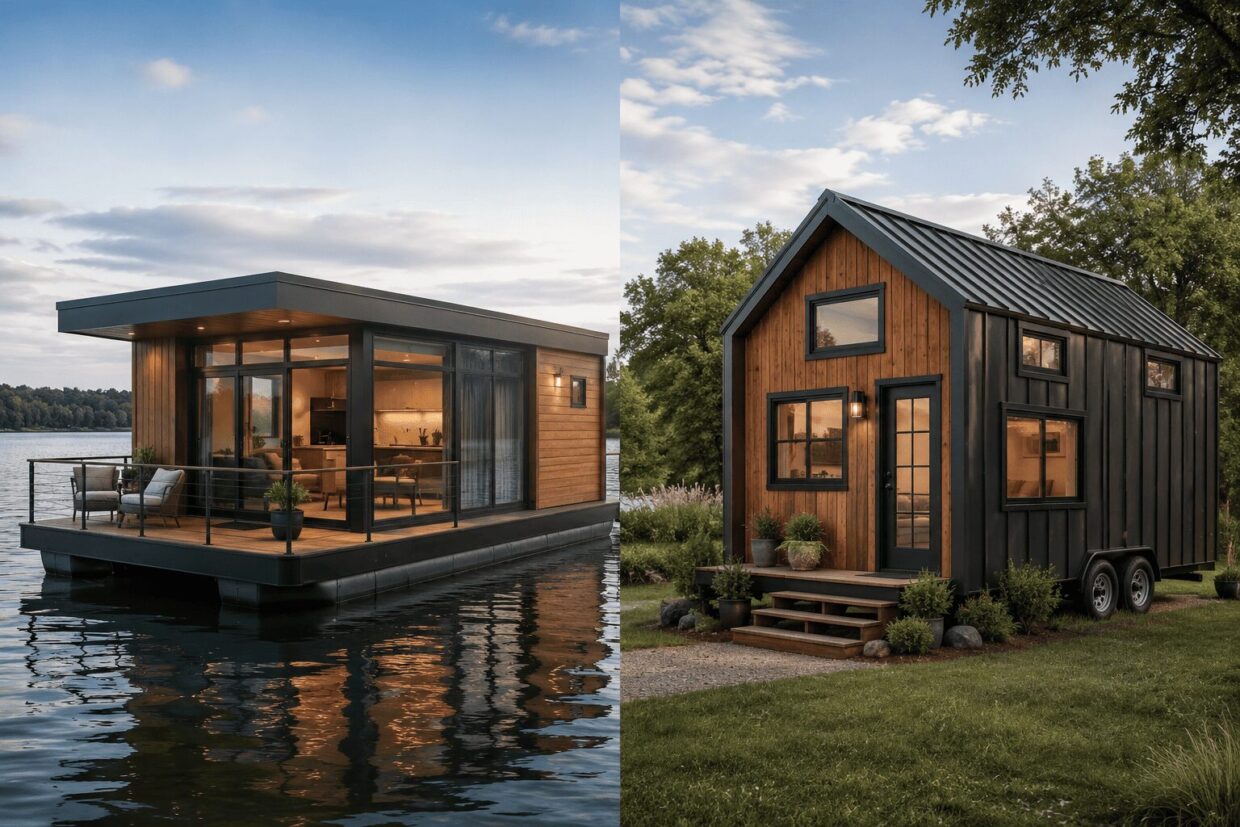
Houseboat vs. Tiny Home: Cost, Maintenance, and Lifestyle Compared
Post Tags:
| QUICK ANSWER
✓ Used houseboats in good condition run $30,000–$200,000, while new entry-level houseboats typically start around $240,000. ✓ Tiny homes cost less upfront, generally $30,000–$70,000, with luxury models reaching up to $180,000. ✓ Houseboat living can save $700–$2,000 a month versus renting in a high-cost city, but liveaboard marina slips often have long waitlists and cost roughly double a standard slip. ✓ Tiny home land or lot rent typically runs $250–$1,500 a month, plus property taxes and utility hookups if you own the land. |
Both houseboats and tiny homes promise the same basic trade: less square footage, more freedom, and a smaller monthly bill than a conventional house. But they are not interchangeable lifestyles, and the cost structure behind each is different enough that picking the wrong one can leave you paying more than you expected. This guide compares real 2026 pricing, ongoing costs, and day-to-day maintenance for both, so you can weigh water living against land-based minimalist living with your eyes open.
What Is a Houseboat, Exactly?
A houseboat is a vessel designed and built for full-time or extended living aboard, combining a boat’s hull and mobility with a home’s living amenities — kitchen, bathroom, bedroom, and often a full HVAC system. Houseboats range from simple, older models bought used and renovated, to new, fully custom builds designed from the ground up as permanent floating homes. Unlike a typical recreational boat, a houseboat prioritizes livable space and comfort over speed or open-water performance.
What Is a Tiny Home?
A tiny home is a compact, land-based dwelling, typically under 400 square feet, built either on a foundation or on a trailer chassis for mobility. Tiny homes have become a mainstream minimalist housing option over the past decade, prized for lower upfront cost, reduced utility bills, and the ability — in the case of wheeled models — to relocate without selling and rebuying property.
Upfront Cost Comparison
| Option | Typical Cost Range | Notes |
| Used houseboat | $30,000–$200,000 | Wide range based on age, condition, and size |
| New entry-level houseboat | From ~$240,000 | Custom or new-build units start significantly higher than used |
| Tiny home (standard) | $30,000–$70,000 | Most common price range for a well-built tiny home |
| Tiny home (luxury/custom) | Up to $180,000 | High-end finishes, larger footprint, or premium materials |
At the entry level, a used houseboat and a standard tiny home occupy a similar price band. The gap widens sharply if you want a new-build houseboat, which starts well above even a luxury tiny home.
Monthly Living Cost Comparison
| Cost Factor | Houseboat | Tiny Home |
| Typical monthly site cost | Marina/slip fees — liveaboard slips often double a standard slip rate | Lot rent typically $250–$1,500/month, or property taxes if you own land |
| Potential monthly savings vs. renting | $700–$2,000/month in high-cost cities | Varies by land cost, but generally lower baseline utility bills |
| Availability | Liveaboard marina slips often have long waitlists | Land or RV/tiny-home lots are generally easier to find, though zoning varies |
| Utilities | Water, sewage pump-out, and shore power hookups vary by marina | Standard utility hookups if on a foundation or serviced lot |
The biggest practical difference is availability and predictability. Tiny home lots, while subject to local zoning, are generally more available than liveaboard marina slips, which in many popular waterfront markets carry long waiting lists and premium pricing precisely because supply is limited.
Maintenance: What You Are Actually Signing Up For
- A houseboat requires marine-specific maintenance: hull inspections, engine or motor servicing (if self-propelled), bilge pump checks, and protection against corrosion from constant water exposure.
- A tiny home requires maintenance closer to a standard small house: roof, siding, plumbing, and — for wheeled models — axle and tire maintenance if it will be moved.
- Weather preparation differs significantly: houseboats need storm and flooding preparedness specific to their marina location, while tiny homes need standard severe-weather precautions appropriate to their region.
- Insurance for houseboats is typically more specialized and can be more expensive than tiny home insurance, reflecting the added marine risk factors.
Lifestyle Differences That Matter More Than Price
| Factor | Houseboat | Tiny Home |
| Setting | Waterfront, marina community | Anywhere with suitable land or a hosting lot |
| Mobility | Can be relocated by water, weather and route permitting | Wheeled models can be towed; foundation models cannot move |
| Community | Marina liveaboard communities, often tight-knit | Varies widely — tiny home communities exist but are less universal |
| Space efficiency | Layout constrained by hull shape | More flexible interior layout options |
Real Product: Houseboat by Safe Room Designs
Within the floating structures category, the available Houseboat listing is built as an easily customizable unit, meaning the interior layout is not locked to a single fixed template. It supports solar panel installation, which can meaningfully reduce dependence on shore power at a marina — a real ongoing cost that adds up over a liveaboard lease. A fireplace can be installed for climates or seasons where that matters, and the unit comes with a pre-installed HVAC system, addressing one of the more overlooked comfort factors in on-water living, where temperature swings can be more pronounced than in a land-based home.
Common Regrets People Report With Each Lifestyle
Talk to enough houseboat and tiny home owners and the same handful of regrets come up repeatedly on each side. Understanding them before you buy is far cheaper than learning them after.
Houseboat living — common regrets:
- Underestimating how much marina and slip fees rise over time, especially in high-demand waterfront markets.
- Not accounting for seasonal weather prep — winterizing systems, storm securing — as a recurring time and cost commitment.
- Discovering how limited liveaboard slip availability is only after already purchasing a boat, leaving them scrambling for a place to legally live aboard.
Tiny home living — common regrets:
- Underestimating storage needs, particularly for households that downsized from a much larger home.
- Not researching local zoning thoroughly enough before purchasing a wheeled unit, then discovering limited legal placement options nearby.
- Choosing a lower-quality build to save money upfront, then facing costly repairs sooner than expected.
Buying Checklist: Before You Commit to Either
- Confirm actual site availability first — a liveaboard marina slip or a legal tiny-home lot — before finalizing which unit to buy.
- Get a full, written breakdown of monthly costs: slip/lot fees, utilities, insurance, and any HOA or marina rules.
- Ask directly about maintenance history and any prior repairs, especially for a used houseboat where hull condition is critical.
- Confirm financing terms and lender requirements before shopping, since financing availability differs meaningfully between the two categories.
- Visit in person if possible, ideally during less favorable weather, to get a realistic sense of comfort and noise levels rather than judging only from a calm, sunny showing.
Financing Considerations
Financing differs meaningfully between the two. Houseboats intended as a primary residence sometimes qualify for specialized marine or houseboat loans, but terms and lender availability vary widely and are less standardized than a conventional mortgage. Tiny homes on a permanent foundation may qualify for more conventional home-improvement or construction loans, while wheeled tiny homes are more often financed similarly to an RV. In both cases, confirm financing options and lender requirements early — before you fall in love with a specific unit — since financing can be the deciding factor between two otherwise comparable options.
Legal and Zoning Considerations
Both lifestyles run into regulatory friction that catches new buyers off guard. Houseboats used as a full-time residence may be subject to marina-specific liveaboard rules, local maritime regulations, and — in some jurisdictions — different tax treatment than a recreational boat. Tiny homes face their own patchwork of rules: many municipalities regulate minimum dwelling sizes, require a home to be on a permanent foundation to count as a legal residence, or restrict where a wheeled unit can be parked long-term. Neither category has fully standardized nationwide rules, which means the single most important piece of due diligence for either option is confirming legality and zoning for your specific intended location before you buy, not after.
Which One Fits You?
Choose a houseboat if waterfront living itself is the draw, you have identified a marina with available liveaboard slips, and you are comfortable with marine-specific maintenance and insurance. Choose a tiny home if you want lower and more predictable upfront and ongoing costs, more flexibility in where you can place it, and maintenance that more closely resembles a conventional small house. Both deliver a smaller footprint and lower bills than a conventional home — the right choice comes down to whether water or land is the setting you actually want to live in every day.
Frequently Asked Questions
Is a houseboat cheaper than a tiny home?
Not necessarily. Used houseboats in good condition ($30,000–$200,000) can be similarly priced to tiny homes ($30,000–$70,000) at the entry level, but new-build houseboats start around $240,000, well above even a luxury tiny home.
How much can you save living on a houseboat instead of renting?
People in high-cost cities can save between $700 and $2,000 per month by trading an apartment for a boat slip, though this depends heavily on marina fees and local rental prices.
Is it hard to find a liveaboard marina slip?
Often, yes. Many marinas have long waitlists for liveaboard slips, which typically cost about twice as much as a standard, non-liveaboard slip.
How much does it cost to rent land for a tiny home?
Renting a lot for a tiny home on wheels typically ranges from $250 to $1,500 a month, depending on location and amenities. If you own the land instead, you will face property taxes and utility hookup costs.
Which requires more maintenance, a houseboat or a tiny home?
A houseboat generally requires more specialized maintenance, including hull inspections, corrosion protection, and marine engine servicing if applicable. A tiny home’s maintenance needs are closer to a conventional small house.
Can a houseboat be financed like a house?
Not exactly. Houseboats intended as a primary residence sometimes qualify for specialized marine or houseboat loans, but terms and availability vary by lender and are less standardized than a conventional home mortgage.
Can a houseboat run on solar power?
Many houseboats, including the Safe Room Designs Houseboat listing, support solar panel installation, which can reduce dependence on marina shore power and lower ongoing utility costs.
Is a tiny home or houseboat more mobile?
A wheeled tiny home can be towed to a new location relatively easily, while a foundation-based tiny home cannot move at all. A houseboat can be relocated by water, though this depends on weather, route, and marina availability at the destination.
Do houseboats hold their value like tiny homes?
Resale value for both depends heavily on condition, age, and market demand in the specific area. Neither category should be treated as a guaranteed investment in the way a traditional home might be marketed.
What insurance do I need for a houseboat versus a tiny home?
Houseboat insurance is typically more specialized due to marine risk factors and can be more expensive than standard tiny home insurance, which more closely resembles coverage for a small structure or RV depending on whether it is on wheels.
Sources
Cost and lifestyle figures referenced in this article are drawn from 2026 sources including Senior Living, Power Queen, ok.com, Crow Survival, and SoFi. Figures are illustrative market ranges as of August 2026 and vary significantly by region, marina, and unit condition — always confirm current pricing, slip availability, and financing terms directly before purchasing.


Recent Blog Posts