How Long Do Container Homes Last? Lifespan, Durability & Maintenance Guide
How Long Do Container Homes Last? Lifespan, Durability & Maintenance Guide
Post Tags:
A properly built and maintained container home typically lasts 25 to 50 years or more — and in some cases considerably longer, since the shipping containers themselves are engineered to survive decades of ocean transport, stacking loads, and constant weather exposure before they’re ever converted into a home. That baseline durability is a real structural advantage. But the exact number for any specific home depends heavily on how it was built, where it’s located, and how it’s maintained afterward — which is the part most buyers actually need to understand before they commit.
This guide breaks down what actually determines a container home‘s lifespan, whether rust is a real long-term problem, how container home durability compares to a traditional wood-frame house, and the specific maintenance steps that protect the investment over time.
How Long Do Container Homes Actually Last?
In a controlled build with proper maintenance, a container home can reasonably be expected to last 25 to 50 years, and well-maintained examples can exceed that range. The containers themselves are built from Corten steel (weathering steel), a material specifically developed to resist the corrosive conditions of ocean shipping far more effectively than standard steel. That’s the starting point for a container home’s durability — but it’s only the starting point, because a shipping container sitting in a shipyard and a shipping container converted into an insulated, occupied home experience very different long-term stress on the steel shell.
Why the Range Is So Wide: 25 Years vs. 50+ Years
The gap between the low end and high end of that range comes down to a handful of variables that are largely within the buyer’s and builder’s control:
– Build quality: how the steel was prepped, primed, and sealed before insulation and finishing went on.
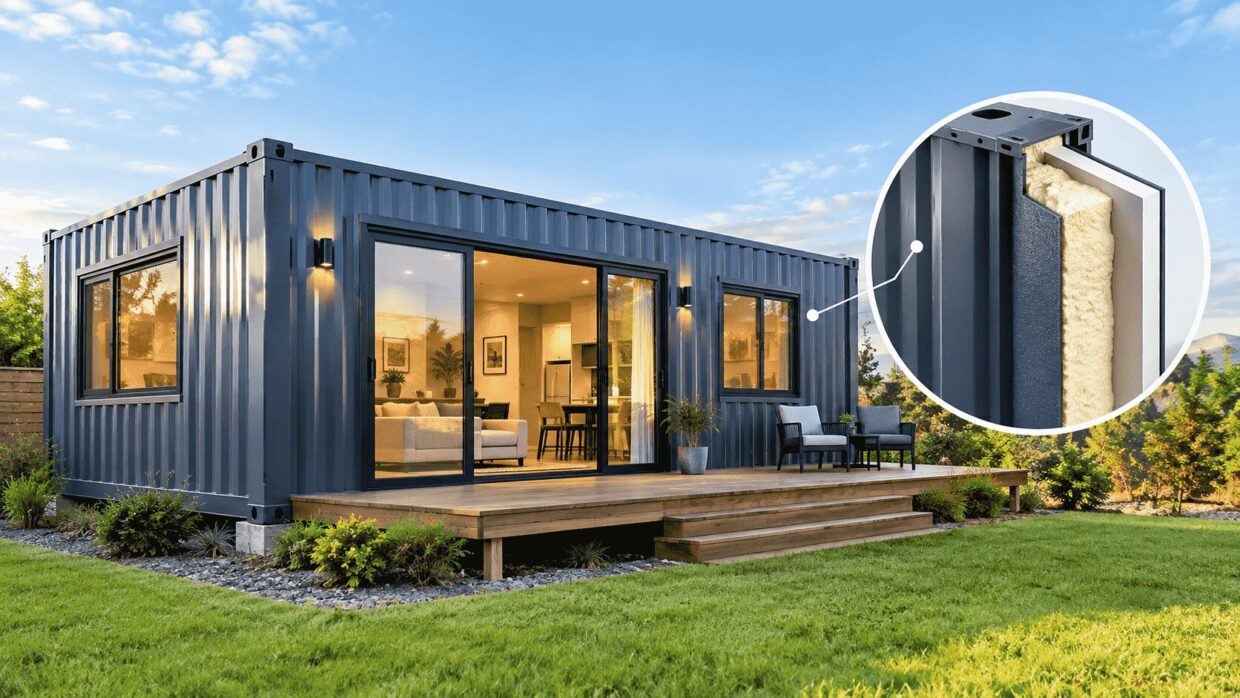
– Insulation method: closed-cell spray foam bonds directly to the steel and creates a continuous air and vapor barrier, which meaningfully reduces the moisture exposure that causes hidden corrosion behind walls — unlike insulation methods that leave gaps or trap moisture against the metal.
– Climate and exposure: a container home in a dry inland climate faces far less corrosion pressure than one near the coast, where salt air accelerates rust, or in a consistently humid region.
– Ongoing maintenance: regular inspection and touch-up of exterior coatings extends lifespan significantly; neglecting it shortens it just as significantly.
In practice, a container home built with proper steel prep, closed-cell spray foam insulation, and a maintained exterior coating in a moderate climate sits comfortably at the higher end of the range. A home built with cost-cutting shortcuts and located in a harsh coastal environment, with no ongoing maintenance, will land closer to the lower end.
Do Container Homes Rust? What Corten Steel Actually Does
Yes, container homes can rust, and it’s worth being direct about that instead of glossing over it. Corten steel’s defining property is that it forms a protective, stable layer of surface rust (a patina) that actually slows further corrosion underneath — it is corrosion-resistant, not corrosion-proof. An unmodified container is wind- and watertight, but the steel remains susceptible to rust over time, particularly at weld seams, floor tracks, and anywhere the original protective coating has been compromised during the conversion process (cutting window and door openings, for example, exposes bare steel edges that need to be re-sealed).
The real risk isn’t surface rust on the exterior, which is visible and addressable — it’s hidden corrosion that develops behind interior wall finishes when moisture gets trapped against the steel and isn’t caught early. This is exactly why insulation choice matters as much as it does: closed-cell spray foam bonds to the steel and seals out the oxygen and moisture that corrosion needs, which is why it’s the insulation method most experienced container home builders and building-science professionals recommend specifically for long-term corrosion prevention.
What Actually Shortens a Container Home’s Lifespan
A handful of specific issues account for most premature container home problems:
– Skipping proper steel prep before finishing — painting or coating over existing surface rust or contamination instead of grinding it back to clean metal first.
– Cut openings left improperly sealed — every window, door, and utility penetration is a point where the original factory coating has been breached and needs deliberate re-sealing.
– Insulation that traps moisture against the steel instead of sealing it out, which can accelerate hidden corrosion rather than prevent it.
– Deferred exterior maintenance — letting coating damage, scratches, or chips sit unaddressed long enough for rust to establish and spread underneath paint.
– Harsh, unmitigated coastal exposure without upgraded marine-grade coatings or more frequent inspection intervals.
Container Homes vs. Traditional Wood-Frame Homes: How Does Lifespan Compare?
A well-built traditional wood-frame home can also last many decades, so the honest comparison isn’t “container homes last longer” — it’s that they fail differently and are vulnerable to different things:
– Structural pests: a steel container structure is immune to termite damage, which is one of the most common causes of structural repair and premature replacement in wood-frame homes in much of the U.S.
– Rot: steel doesn’t rot the way wood framing can when exposed to sustained moisture, though the interior finishes in a container home (drywall, flooring, trim) are still vulnerable to the same moisture damage as any home.
– Corrosion vs. decay: where a wood-frame home’s structural risk is moisture-driven decay and pest damage, a container home’s structural risk is moisture-driven corrosion — different mechanism, comparable importance, and both are manageable with proper building practices.
– Extreme wind and impact: a steel container shell generally has a structural strength advantage over standard wood framing in high-wind events, given its engineering for stacking and ocean transport loads.
Neither structure type is maintenance-free, and neither lifespan claim should be taken as a guarantee — both depend heavily on build quality, climate, and upkeep.
Maintenance Checklist: How to Protect a Container Home Long-Term
- Inspect the exterior coating annually. Look specifically at weld seams, corners, and any area where the paint or coating shows chips, scratches, or wear, and address them before rust has a chance to establish.
- Use marine-grade, anti-corrosive paint designed specifically for steel, particularly in coastal or high-humidity regions, and reapply on the manufacturer’s recommended schedule rather than waiting for visible failure.
- Confirm closed-cell spray foam insulation was used (or budget to add it), since it doubles as a vapor barrier that protects the steel from the inside as well as the outside.
- Check and reseal window, door, and utility penetrations periodically, since these cut edges are the most common starting point for hidden corrosion.
- Manage drainage and grading around the foundation so water doesn’t pool against the base of the structure, which accelerates corrosion at the most vulnerable point of the shell.
- Increase inspection frequency in harsh climates — coastal, high-humidity, or heavy-snow regions all put additional stress on exterior coatings and warrant closer, more frequent checks than a moderate inland climate.
Common Mistakes to Avoid
Buying based on price alone without asking about steel prep and insulation method. Two container homes can look identical on the outside while having very different long-term corrosion risk based on what happened before the walls were closed up.
Assuming “container home” means zero maintenance. Every home requires upkeep; container homes simply require a different maintenance focus (coating and seal integrity) than a wood-frame home does (rot, pests, and siding).
Ignoring climate fit. A build and maintenance plan appropriate for a dry inland climate may be inadequate for a coastal property, and vice versa.
Expert Tips for Maximizing Container Home Lifespan
Ask any builder directly what steel prep process they use before insulation goes in, and ask specifically whether closed-cell spray foam is standard or an upsell — this single decision affects corrosion resistance more than almost any other build choice. For coastal or high-humidity properties, ask about marine-grade coating options and realistic recoat intervals up front, since retrofitting better protection later is more expensive than specifying it during the build.
Frequently Asked Questions
How long do container homes typically last?
Most properly built and maintained container homes last 25 to 50 years or more. The exact figure depends on build quality, insulation method, climate exposure, and ongoing maintenance.
Do container homes rust over time?
They can. Shipping containers are made of Corten steel, which resists corrosion better than standard steel but is not rust-proof. Surface rust is manageable with maintenance; the bigger risk is hidden corrosion behind walls if moisture gets trapped against unsealed steel.
Is closed-cell spray foam really necessary in a container home?
It’s widely recommended by experienced container home builders because it bonds directly to the steel and creates a continuous vapor barrier, which significantly reduces the moisture exposure that causes hidden corrosion. Other insulation types can work but generally require more careful moisture management.
Do container homes last as long as traditional houses?
A well-built container home and a well-built wood-frame home can both last many decades. They’re vulnerable to different things — corrosion versus rot and pest damage — so “longer lasting” depends more on build quality and maintenance than on the material itself.
How often should a container home’s exterior be inspected?
An annual inspection of the exterior coating, seams, and cut openings is a reasonable baseline, with more frequent checks recommended in coastal, high-humidity, or harsh-climate locations.
Does climate affect how long a container home lasts?
Yes, significantly. Coastal properties face accelerated corrosion risk from salt air, and consistently humid climates put more stress on coatings and seals than a dry inland location. Maintenance frequency should be adjusted accordingly.
Can an older or used shipping container still make a durable home?
It can, provided the container is properly inspected, prepped, and any existing corrosion is addressed before conversion. Container condition prior to conversion is a meaningful factor in long-term durability, which is why sourcing and pre-conversion inspection matter.
What’s the single biggest factor in container home longevity?
Moisture control — specifically, keeping moisture from reaching bare or exposed steel, whether through proper insulation, sealed cut openings, or maintained exterior coatings. Most premature corrosion issues trace back to moisture exposure that could have been prevented.
Do container homes need different insurance considerations because of lifespan concerns?
Insurance requirements and availability vary by insurer and region. It’s worth discussing build specifics (insulation method, coating, foundation) directly with an insurer familiar with alternative construction rather than assuming standard homeowner’s coverage applies without questions.
How does foundation type affect container home lifespan?
A proper foundation that keeps the container shell elevated and well-drained reduces moisture exposure at the base of the structure, which is one of the more vulnerable points for corrosion. Foundation and site drainage should be part of any lifespan discussion with a builder.
Planning a Long-Term Container Home?
Lifespan and durability come down to decisions made before the walls ever go up — steel prep, insulation method, coating quality, and site drainage all matter more than the container itself. Safe Room Designs offers customizable container home builds and works with buyers to make those decisions upfront rather than after the fact. Ready to explore a custom container home built for the long term? Contact Safe Room Designs to discuss your project and available options.


Recent Blog Posts