From Container to Storefront: Building a Mobile Bar or Restaurant
From Container to Storefront: Building a Mobile Bar or Restaurant
Post Tags:
| QUICK ANSWER
✓ A basic 20ft container bar conversion runs about $15,300; a fully finished, pre-built container bar costs $20,000–$95,000. ✓ Container restaurant and kitchen conversions range from $75,000–$125,000 for a compact build to $150,000–$250,000+ for a fully equipped unit. ✓ Container conversions typically cost 30–50% less than a comparable traditional brick-and-mortar build-out. ✓ A new 20ft container alone starts around $3,300 in 2026, before any conversion work — the container itself is a small fraction of the total cost. |
Opening a bar or restaurant in a shipping container has gone from a novelty to a genuine strategy for keeping startup costs down. But “container conversion” covers a wide range of builds — a simple pour-over bar with a serving hatch is a very different project from a fully equipped commercial kitchen with hoods, grease traps, and walk-in refrigeration. This guide breaks down what each tier actually costs in 2026, what the process looks like from empty box to opening day, and how to decide which build fits your concept.
What Is a Container Bar or Restaurant Conversion?
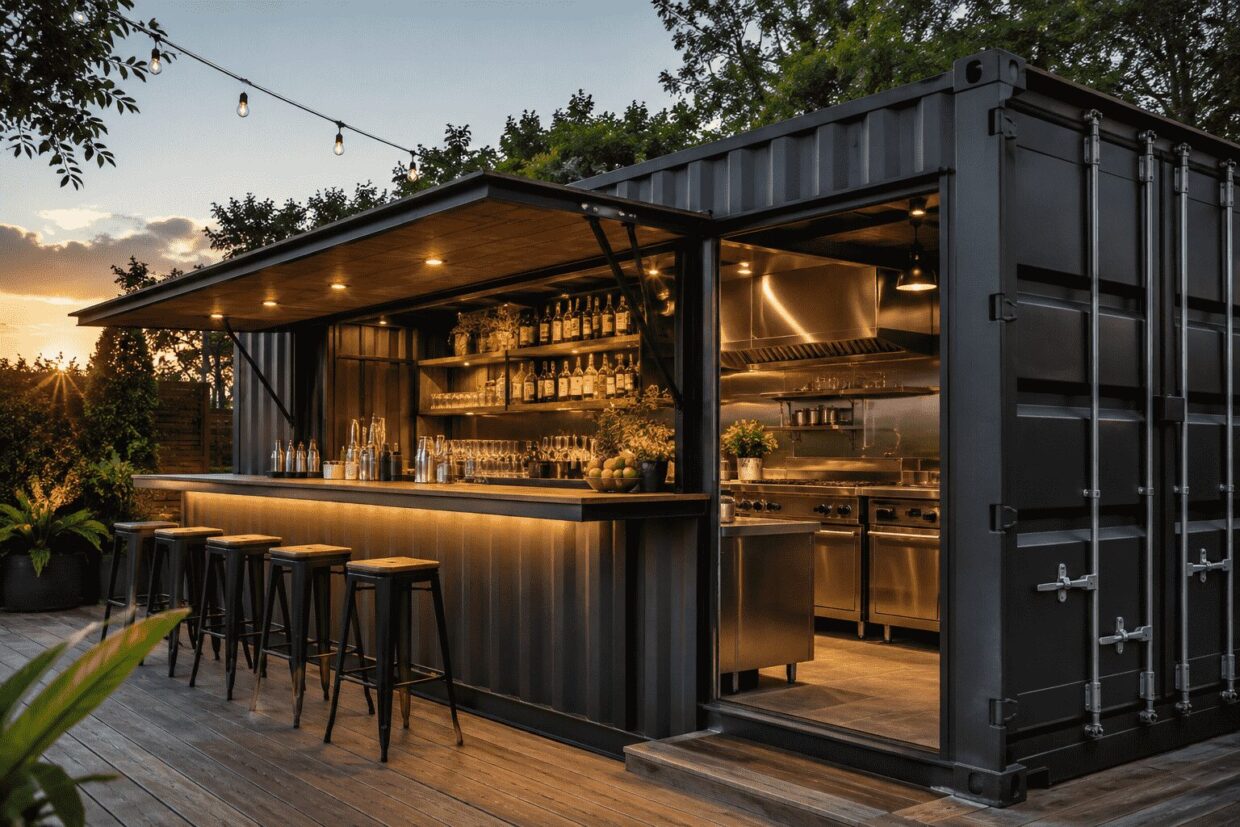
A container bar or restaurant is a standard 20ft or 40ft steel shipping container retrofitted with serving windows, counters, plumbing, ventilation, and — for full kitchens — commercial cooking equipment. Because the shell is already structurally sound and weatherproof, most of the conversion budget goes into the systems inside it: electrical, plumbing, HVAC, and food-service equipment, rather than the building itself. This is what makes containers dramatically faster to deploy than a traditional buildout, which typically requires permitting and construction of the shell itself before any interior work can even begin.
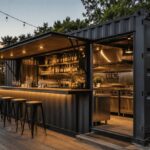
The two most common formats are the container bar — typically a single unit with a serving window, back bar storage, and basic refrigeration — and the container restaurant or kitchen, which is built out with full commercial cooking equipment and needs to meet the same health code standards as a fixed-location kitchen.
Container Bar Conversion Costs (2026)
| Build Type | Typical Cost | What You Get |
| Basic 20ft bar build | ~$15,300 | Serving window, counter, basic electrical, minimal plumbing |
| Basic 40ft bar build | ~$15,450 | Similar scope to 20ft with more interior space |
| Pre-converted, ready-to-operate bar | $20,000–$95,000 | Finished interior, refrigeration, tap or pour systems, exterior finishing |
The wide range for a pre-converted bar comes down to finish level — a straightforward pour-over setup sits at the low end, while a bar with custom cladding, tap systems, sound, and lighting climbs toward the upper end of that range.
Container Restaurant & Kitchen Conversion Costs (2026)
| Build Type | Typical Cost | What You Get |
| Compact food-service build | $75,000–$125,000 | Core cooking equipment, ventilation hood, basic plumbing and electrical |
| Fully equipped kitchen unit | $150,000–$250,000+ | Full commercial-grade equipment, walk-in storage, complete health-code build-out |
| Multi-container village / complex | $200,000+ | Multiple linked units for a larger operation, food hall, or event venue |
A commercial kitchen build costs more than a bar largely because of code requirements: grease-rated ventilation hoods, fire suppression systems, grease interceptors, and equipment that meets local health department standards all add cost that a simple bar conversion does not need.
Why Container Builds Cost Less Than Traditional Construction
A fully outfitted shipping container kitchen typically costs 30–50% less than a comparable conventional restaurant build-out. Part of that saving is the shell itself — a new 20ft container starts around $3,300 in 2026, with a 20ft high-cube unit around $8,000, and used 40ft containers starting near $1,800–$1,900. Compared to pouring a foundation and framing a structure from scratch, starting with an existing weatherproof shell removes a major cost and timeline variable before interior work even begins.
| Container Type | Approx. 2026 Base Cost |
| New 20ft standard | ~$3,300 |
| New 20ft high-cube | ~$8,000 |
| Used 40ft standard | ~$1,800 |
| Used 40ft high-cube | ~$1,900 |
What a Real Container Bar and Kitchen Build Includes
To ground this in an actual product rather than a generic estimate, a manufactured container bar and kitchen unit typically includes the following as standard or available options:
- Fully customizable interior layout to match your bar, café, or restaurant concept rather than a fixed template.
- Solar panel compatibility, which can meaningfully cut ongoing utility costs for a mobile or off-grid location.
- Optional fireplace installation — a feature more common in hospitality-focused container builds than pure food-service units.
- Pre-installed HVAC system, which matters both for guest comfort and for keeping commercial refrigeration and food storage within safe temperature ranges.
These features illustrate why a manufactured, purpose-built container bar or kitchen unit is worth comparing directly against a DIY conversion — the pre-engineering around climate control and layout flexibility often closes much of the price gap once you account for the cost of adding those systems yourself.
Step-by-Step: From Empty Container to Opening Day
- Define your concept and menu first — this determines whether you need a simple bar shell or a full health-code commercial kitchen, which changes the budget significantly.
- Choose new vs. used and 20ft vs. 40ft based on your footprint needs and budget.
- Confirm local zoning, health department, and fire code requirements before finalizing the interior design — retrofitting after the fact is far more expensive than designing to code from day one.
- Work with the manufacturer or contractor on electrical, plumbing, and ventilation design, including where the unit will connect to utilities or run on solar and water tanks.
- Install commercial equipment and finish interior and exterior cladding, signage, and serving windows.
- Schedule health department and fire marshal inspections before your planned opening date, building in buffer time for any required corrections.
- Plan your site placement — power, water, and waste hookups, plus ADA-compliant guest access, all need to be confirmed at the location itself.
Bar Container vs. Restaurant Container: Which Fits Your Concept?
| Factor | Container Bar | Container Restaurant/Kitchen |
| Typical cost | $15,000–$95,000 | $75,000–$250,000+ |
| Code complexity | Lower — mainly electrical and basic plumbing | Higher — full health code, ventilation, fire suppression |
| Timeline | Weeks to a few months | Several months, driven by permitting and equipment lead times |
| Best for | Pop-ups, event bars, breweries, seasonal venues | Full-service or quick-service food operations, ghost-kitchen-style delivery models |
New vs. Used Container: Which Should You Start With?
| Factor | New Container | Used Container |
| Upfront cost | Higher base price, no hidden repair needs | Lower base price, but may need floor or wall repairs |
| Condition | No rust, dents, or chemical residue from prior cargo | Varies widely — inspection is essential before buying |
| Lead time | Depends on manufacturer order queue | Often available faster from local container yards |
| Best for | Food-service builds needing a guaranteed clean interior | Bar or storage-focused builds where budget matters more than pedigree |
For food-service specifically, most operators lean toward new or “one-trip” containers — units that have made a single cargo journey — since health departments may ask about prior use, and a clean welding and flooring surface avoids costly remediation before food-grade finishing can begin.
Equipment Checklist for a Container Kitchen
Before finalizing your build budget, confirm which of the following your concept actually needs — this list is where costs most often run over if it is not planned early:
- Commercial-grade cooking equipment sized to your menu (griddle, fryer, oven, or specialty equipment).
- A code-compliant exhaust hood with grease filtration, sized to your cooking equipment’s heat output.
- Fire suppression system rated for the hood and equipment installed beneath it.
- Commercial refrigeration and, if needed, freezer storage sized for your expected volume.
- A three-compartment or equivalent approved sink setup, plus a separate handwashing sink, to meet most health codes.
- Grease interceptor or trap, sized and installed according to local plumbing code.
- Point-of-sale and service window setup appropriate to counter-service or walk-up ordering.
Permits, Health Codes, and Common Pitfalls
- Assuming a container is automatically code-compliant — it still needs to meet the same health and fire codes as any fixed food-service location in your jurisdiction.
- Underestimating ventilation requirements — a real cooking hood system with proper clearances is one of the most commonly missed line items in early budgets.
- Skipping ADA accessibility planning for guest-facing windows and walkways, which many jurisdictions require regardless of the structure type.
- Not confirming water and waste hookup availability at the intended site before committing to a location.
- Ordering equipment before finalizing the electrical and gas load calculations, which can force expensive last-minute changes.
Container vs. Food Truck vs. Traditional Restaurant: Cost Comparison
Container builds sit in a middle ground between food trucks and full brick-and-mortar restaurants, both in cost and in what they allow you to do once open:
| Format | Typical Startup Cost | Mobility | Seating/Dine-In |
| Food truck | $50,000–$175,000 | Fully mobile, daily relocation possible | None — walk-up or delivery only |
| Container bar/restaurant | $15,000–$250,000+ | Relocatable, but not daily — needs a fixed pad or hookups | Can add outdoor seating around the unit |
| Traditional restaurant build-out | $250,000–$500,000+ | Fixed location only | Full indoor dine-in capacity |
The practical takeaway is that a container sacrifices the daily mobility of a food truck in exchange for more space, sturdier construction, and the option to add real outdoor seating — while still costing meaningfully less than converting a leased commercial space from scratch.
Is a Container Bar or Restaurant Right for Your Business?
A container build makes the most sense if you want to open faster and with less upfront capital than a traditional space requires, particularly for pop-up, seasonal, or event-driven concepts where mobility is an asset rather than a limitation. It also suits operators testing a new concept or location before committing to a permanent lease. It is less suited to concepts requiring a large dine-in footprint or extensive kitchen equipment that would need multiple linked containers, where the cost advantage over traditional construction narrows considerably.
Frequently Asked Questions
How much does it cost to convert a shipping container into a bar?
A basic 20ft container bar conversion costs around $15,300, covering a serving window, counter, and basic electrical and plumbing. A fully finished, ready-to-operate container bar with refrigeration and tap systems typically runs $20,000 to $95,000 depending on finish level.
How much does a container restaurant or commercial kitchen cost?
A compact container food-service build typically costs $75,000 to $125,000, while a fully equipped unit with complete health-code compliance runs $150,000 to $250,000 or more. Multi-container setups for larger operations can exceed $200,000.
Are container restaurants cheaper than traditional restaurant construction?
Yes. A fully outfitted shipping container kitchen typically costs 30–50% less than a comparable conventional build-out, largely because the container itself provides a weatherproof shell without the cost of framing and foundation work.
Does a container restaurant need to meet the same health codes as a regular restaurant?
Yes. A container-based kitchen must meet the same local health department and fire code requirements as any fixed-location restaurant, including ventilation, grease management, and food safety standards.
What size container is best for a bar or restaurant?
A 20ft container suits a simple bar or compact food stall, while a 40ft container gives more room for a full kitchen line or additional seating and storage. Larger operations sometimes link multiple containers together.
How long does it take to open a container bar or restaurant?
A container bar can often be ready in a matter of weeks to a few months. A full container restaurant typically takes several months, largely driven by permitting timelines and commercial equipment lead times rather than the container conversion itself.
Can a container bar or restaurant run off-grid or on solar power?
Many manufactured units support solar panel installation, which can reduce or eliminate grid dependency for lighting, refrigeration, and basic equipment, though heavier cooking equipment may still require a grid or generator connection.
What features come standard on a manufactured container bar or kitchen?
Typical standard or available features include a customizable interior layout, solar panel compatibility, pre-installed HVAC, and optional fireplace installation, in addition to the core electrical, plumbing, and ventilation systems needed for food or beverage service.
Can I move a container bar or restaurant to a new location later?
Yes — mobility is one of the main advantages of a container build over a fixed structure. Moving a fully outfitted unit requires disconnecting utilities and arranging transport, but the container itself is designed to be relocated.
What is the biggest cost difference between a bar and a full restaurant conversion?
The biggest driver is code complexity. A bar mainly needs basic electrical and plumbing, while a full restaurant kitchen requires grease-rated ventilation, fire suppression, and equipment that meets complete health department standards — all of which add significant cost.
Sources
Cost figures referenced in this article are drawn from 2026 industry pricing guides including Container xChange, Midstate Containers, Concept in a Box, and Karpatia Trucks. Figures are illustrative market ranges as of August 2026 and vary by region, equipment specification, and local code requirements — always confirm current pricing and code requirements directly with a manufacturer and your local health department before purchasing.


Recent Blog Posts