Hidden Costs of Tiny Homes Most Buyers Never Budget For
Hidden Costs of Tiny Homes Most Buyers Never Budget For
Post Tags:
Quick Answer: Beyond the purchase price, tiny home buyers frequently overlook land costs, utility hookups, permits, foundation work, delivery fees, zoning compliance, and ongoing maintenance. These hidden costs can add $10,000–$50,000+ to your total investment. This guide breaks down every cost most buyers miss so you can budget accurately from day one.
Tiny homes attract buyers with their low sticker prices — and that low price is real. But buyers who look only at the purchase cost often get surprised by what comes after. We’ve worked with tiny home buyers since 1995, and the pattern is consistent: the hidden costs aren’t a reason to avoid tiny homes, but they are a reason to plan carefully.
This guide covers every cost most tiny home buyers underestimate or forget entirely.
The Purchase Price vs. Total Cost of Ownership
When a tiny home is listed at $45,000, that number typically covers the structure itself — walls, roof, windows, doors, and often appliances. What it rarely includes:
- Land purchase or lease
- Site preparation and foundation
- Utility connections (water, sewer, electric)
- Delivery and placement
- Building permits and inspections
- Zoning compliance modifications
- Landscaping and exterior finishing
Depending on your situation, these add-ons can range from $5,000 (if you already own prepared land with hookups) to $50,000+ (if you’re starting from raw acreage).
12 Hidden Costs of Tiny Home Ownership
1. Land — The Biggest Variable Most People Underestimate
If you don’t already own land, this is your largest cost. Bare land in rural areas might cost $5,000–$30,000 per acre. Serviced lots near cities can run $50,000–$200,000+. And unlike the tiny home itself, you can’t really cut corners on land — location determines everything from resale value to utility access.
If you plan to lease a spot in a tiny home community or RV park, monthly fees range from $300–$800/month — which affects your total cost of ownership significantly over time.
⚠ Watch Out: Buying land without checking zoning first is one of the costliest tiny home mistakes. Some counties have minimum square footage requirements that make tiny homes illegal as primary residences.
2. Site Preparation and Foundation
Raw land needs work before a home can sit on it. Site prep typically involves:
- Clearing trees or brush: $1,000–$5,000
- Grading and leveling: $500–$3,000
- Gravel pad or concrete slab: $3,000–$10,000
- Pier foundation (for permanence): $5,000–$15,000
If you want your tiny home classified as real property (important for financing and resale), a permanent foundation is often required — and that adds cost.
3. Utility Hookups
Connecting a tiny home to existing utilities is rarely as simple as it sounds:
- Water connection: $1,000–$5,000 if near city water; $3,000–$10,000 for a well
- Sewer connection: $2,000–$10,000 for city sewer; $5,000–$15,000 for a septic system
- Electrical panel and hookup: $1,500–$5,000
All Safe Room Designs homes come standard with solar power, which eliminates most ongoing electricity costs — but you’ll still need an initial electrical panel hookup if you plan to connect to the grid as a backup.
4. Delivery and Crane Fees
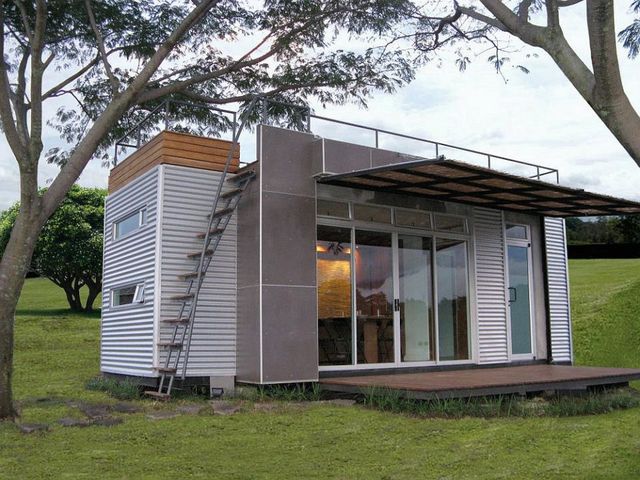
Container homes and modular tiny homes must be transported to your site. Delivery costs vary based on distance and access:
- Local delivery (under 100 miles): $1,000–$3,000
- Long-distance delivery (500+ miles): $3,000–$8,000+
- Crane for placement (often required): $1,500–$5,000
Tight driveways, overhead power lines, or soft ground can add to complexity and cost. Safe Room Designs’ team walks buyers through site requirements before delivery to minimize surprises.
5. Permits and Inspections
Building permits are required in virtually all jurisdictions. For a tiny home, expect:
- Building permit: $500–$3,000 depending on county and home value
- Electrical permit: $200–$500
- Plumbing permit: $200–$500
- Septic permit (if applicable): $500–$2,000
Some buyers skip permits thinking they’re flying under the radar. This is a serious mistake — unpermitted structures create problems with insurance, financing, and resale.
6. Zoning Compliance Modifications
Occasionally, local regulations require specific modifications — fire suppression systems, egress windows of certain sizes, or accessibility features. If your county requires these, budget $1,000–$10,000 for modifications depending on what’s needed.
7. Insurance
Tiny home insurance is more specialized than standard homeowner’s insurance. Costs vary widely:
- Tiny home on foundation (insured as real property): $600–$1,500/year
- Tiny home on wheels (insured more like an RV): $500–$1,200/year
- Container homes may require specialty policies: $800–$2,000/year
Don’t go without insurance. A single storm, fire, or theft event without coverage could leave you with a complete loss.
8. Interior Finishing and Customization
Base models from any builder include standard features, but most buyers want personalization. Upgrades that add cost:
- Flooring upgrades (from laminate to hardwood or tile): $1,000–$4,000
- Kitchen upgrades: $2,000–$10,000
- Bathroom upgrades (soaking tub, tile surround): $1,000–$5,000
- Loft addition or deck: $2,000–$8,000
Safe Room Designs offers extensive customization at the build stage — which is far cheaper than retrofitting later.
9. Internet and Communication Infrastructure
If you’re placing a tiny home in a rural location, reliable internet isn’t guaranteed. Starlink (satellite internet) is the most common solution for rural tiny home owners — equipment runs $350–$600 upfront, plus $120/month. Rural cell signal boosters cost $200–$600. Plan for this if you work remotely.
10. HOA Fees or Community Rules
Tiny home communities often have HOA-style fees covering road maintenance, common areas, and amenities. These typically run $100–$400/month. Read the fine print before committing to any community — some have strict aesthetic requirements, rules about modifications, or limits on how long you can stay.
11. Moving and Storage Costs
Downsizing from a traditional home to a tiny home means deciding what to do with most of your stuff. Storage units run $50–$200/month. Professional movers for a full-home downsize can cost $1,500–$5,000. Many tiny home buyers also spend money on custom tiny-home furniture (built-ins, loft beds, fold-down tables) to maximize space efficiently.
12. Ongoing Maintenance
Tiny homes require the same types of maintenance as traditional homes, just scaled down. Budget annually for:
- Roof inspection and sealing: $200–$500
- HVAC service: $100–$300
- Exterior paint or siding touch-up: $200–$600
- Plumbing and electrical checks: $100–$300
Container homes are particularly low-maintenance due to their steel construction, but regular inspections still matter — especially for any seams or penetrations that could allow moisture intrusion.
Total Hidden Cost Range: What to Budget
| Cost Category | Low Estimate | High Estimate |
| Land Purchase or Lease (1 year) | $3,600 | $200,000+ |
| Site Prep & Foundation | $1,000 | $18,000 |
| Utility Hookups | $2,500 | $30,000 |
| Delivery & Placement | $1,000 | $8,000 |
| Permits & Inspections | $1,000 | $5,000 |
| Insurance (Year 1) | $500 | $2,000 |
| Customization Upgrades | $0 | $25,000 |
| TOTAL HIDDEN COSTS | ~$9,600 | $288,000+ |
If you already own land with existing utilities: your hidden costs drop dramatically and total investment stays very manageable. If starting from scratch on raw acreage: budget for the full range.
How to Budget Smart: Safe Room Designs’ Guidance
Here’s what we tell every buyer who comes to us:
- Get a land quote before falling in love with a model — land is the biggest variable.
- Check zoning before anything else — one phone call to your county planning office can save thousands.
- Request a delivery quote for your specific address early — site conditions affect cost.
- Bundle your customizations at build time — changes after delivery are always more expensive.
- Budget 10–15% above your estimate for unexpected costs — they almost always appear.
Talk to Safe Room Designs before you buy. Our team walks every buyer through a full cost estimate — purchase + land + delivery + setup — so you know the real number before you commit. Call +1-251-421-2398 or email info@saferoomdesigns.net
Frequently Asked Questions
What are the most commonly overlooked costs of buying a tiny home?
The top overlooked costs are land (especially if buying raw acreage), utility hookup fees (water, sewer, electric connections), site preparation like grading and foundation, delivery and crane fees, and building permits. Many buyers also forget about insurance, interior customization upgrades, and internet infrastructure if placing a home in a rural area. Combined, these hidden costs commonly add $10,000–$50,000+ to the total investment beyond the purchase price of the home itself.
Do tiny homes come with utilities included?
The home itself usually includes built-in utility-ready connections — plumbing, electrical wiring, and HVAC — but actually connecting to municipal water, sewer, and the electrical grid involves separate hookup fees. Safe Room Designs homes come standard with solar power, which eliminates most ongoing electricity costs. However, getting that solar system connected to a backup grid or setting up water/sewer service at your specific site will involve local contractor work and permitting costs that vary by location.
Is land required to own a tiny home?
You need somewhere to put your tiny home, but you don’t have to own the land. Options include: purchasing your own land (most control, builds equity), leasing a spot in a tiny home community or RV park ($300–$800/month typical), placing on a friend or family member’s property (check zoning), or renting a short-term lot. Each option has different cost and lifestyle implications. If long-term equity building is your goal, land ownership is usually the better path.
How much does it cost to deliver a tiny home?
Delivery costs depend on distance, home size, and site accessibility. For container homes and modular tiny homes, typical delivery ranges from $1,000 for short local hauls to $8,000+ for cross-country delivery. Many homes also require a crane for final placement, adding $1,500–$5,000. Tight site access, soft ground, or overhead obstacles can increase complexity. Safe Room Designs provides delivery quotes based on your specific address and site conditions before you finalize your purchase.
Do I need a building permit for a tiny home?
In most jurisdictions, yes — a building permit is required for any residential structure, including tiny homes. Permit costs typically range from $500 to $3,000 depending on your county and the assessed value of the structure. You’ll also likely need separate electrical, plumbing, and septic permits. Skipping permits creates serious problems: insurance complications, difficulty selling or refinancing, and potential orders to remove the structure. Always obtain proper permits.
What’s the cheapest way to own a tiny home?
The cheapest total path is: own land already (or inherit/purchase rural land affordably), place the tiny home on a gravel pad rather than a poured foundation, use the home’s built-in solar power rather than grid hookup where possible, use a well and septic instead of city utilities in rural areas, and choose a base model with fewer custom upgrades. Buyers who already own rural land can sometimes get into a complete tiny home setup for $40,000–$70,000 total.
Are there ongoing monthly costs with a tiny home?
Yes — even if you own your tiny home outright with no mortgage. Ongoing costs typically include: property tax ($40–$170/month depending on location and land value), homeowner’s insurance ($40–$170/month), utility fees even with solar (minimal, usually $30–$60/month for water/trash), internet ($50–$130/month), maintenance reserve ($50–$150/month), and any community or HOA fees if applicable. Total ongoing costs for a tiny home owner with no mortgage often run $200–$700/month — still far below traditional homeownership.
What is the hidden cost most people don’t think about?
The most consistently underestimated cost is septic installation. Buyers buying rural land often assume they can use a simple composting toilet or existing systems — but counties frequently require a licensed, permitted septic system for full-time residential use. A proper septic system installation runs $5,000–$15,000 depending on soil conditions and local regulations. Septic perc tests (soil percolation tests, required before installation) cost $500–$1,500 and need to happen before you finalize land purchase.
Can I build a tiny home myself to save money?
DIY tiny home builds can reduce purchase cost significantly, but they come with hidden costs of their own: tools and materials, time investment (often 1–3 years for a quality build), potential mistakes requiring rework, and challenges with permitting a self-built structure. For most buyers, purchasing from an established builder like Safe Room Designs offers better value when accounting for build quality, warranty, and speed to occupancy. Custom configurations at the build stage are far more cost-effective than retrofitting a DIY build.
Does Safe Room Designs help buyers understand total costs before purchasing?
Yes — this is one of the things we’re most proud of. Our sales team doesn’t just quote a home price; we walk every buyer through a full cost picture: purchase price, delivery to your specific location, estimated site prep, utility connection requirements based on your land situation, and financing options through Monevo. We’d rather give you a realistic number upfront than have you surprised after purchase. Call +1-251-421-2398 or email info@saferoomdesigns.net to get started.
— Published by Safe Room Designs | saferoomdesigns.com | +1-251-421-2398 | info@saferoomdesigns.net