What Is a Houseboat? Everything You Need to Know About Floating Homes in 2026
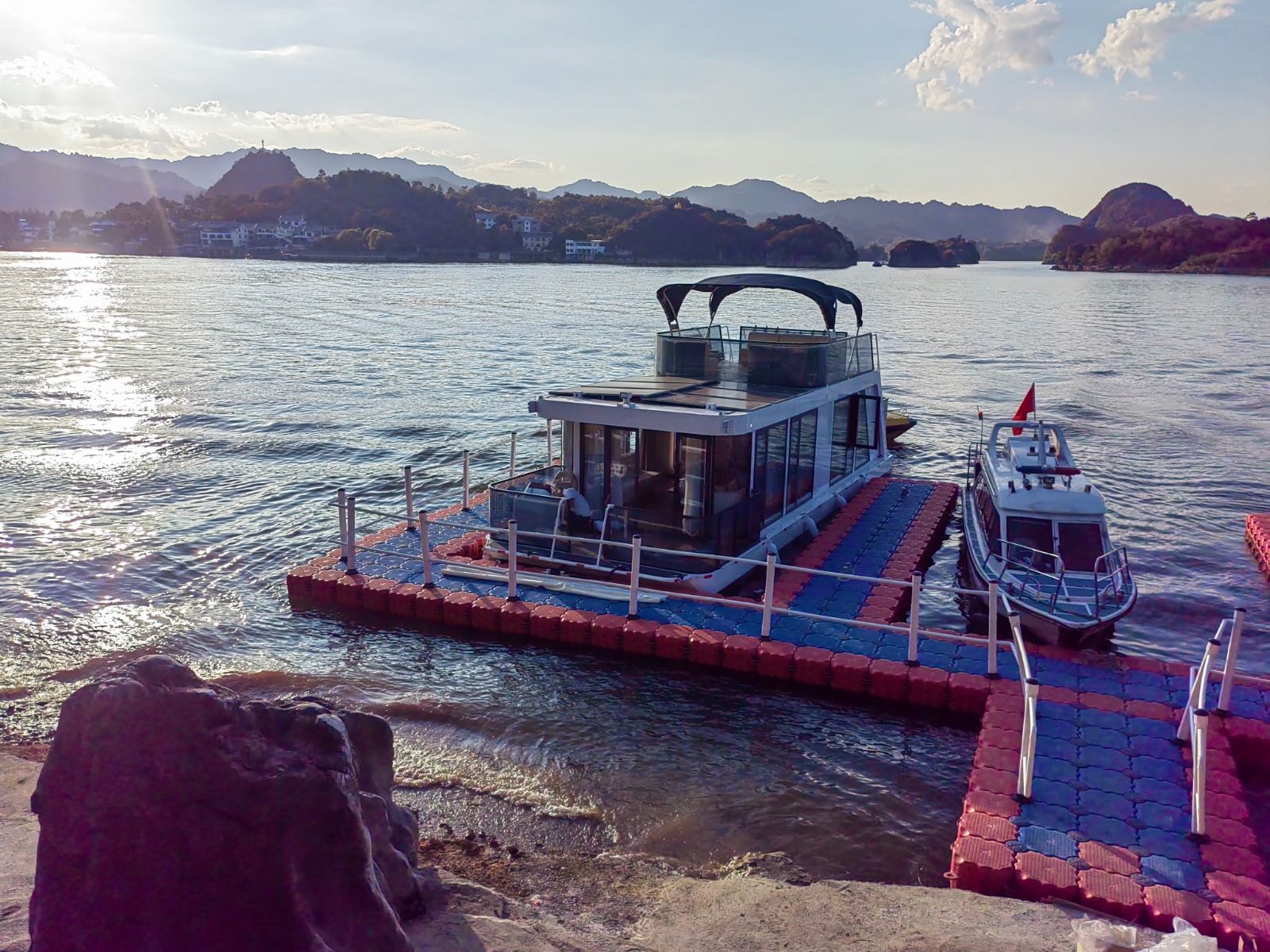
What Is a Houseboat? Everything You Need to Know About Floating Homes in 2026
Post Tags:
Living on the water is one of those ideas that sounds dreamy until you try to figure out how it actually works. What’s the difference between a houseboat and a boat with a cabin? Where can you legally moor a floating home? Can you get a mortgage? What happens in a storm?
Safe Room Designs builds floating structures — including houseboats, pontoon homes, and floating docks — as part of our broader range of alternative housing options. This guide answers every practical question about floating home living so you can decide whether it’s right for you.
Houseboat vs. Floating Home: What’s the Difference?
The terms are often used interchangeably, but there’s a meaningful distinction:
- A houseboat is a boat that is also a home — it has a motor or can be towed, and it’s licensed as a vessel. It can move under its own power or be relocated.
- A floating home (or floating structure) is a residential structure built on a floating platform — typically a steel pontoon or barge hull. It’s designed to stay in one place. It’s a home that floats, not a boat you live in.
Safe Room Designs builds both. Most of our clients looking for permanent waterfront living choose floating homes or stationary houseboats. Clients who want the option to relocate choose true houseboats with propulsion systems.
Types of Floating Structures We Build
Houseboats
Self-contained residential vessels with living quarters, kitchen, bathroom, and sleeping areas. Can be motorized or moored. Available in a range of sizes from compact single-bedroom designs to full family-sized homes.
Pontoon Homes
Residential structures mounted on pontoon flotation systems. Extremely stable, low maintenance, and well-suited to calm water environments like lakes, rivers, and protected coastal areas. Can be customized with the same interior finishes as our land-based container homes.
Boat Houses
Structures built over the water, typically on pilings or a floating platform, designed to shelter a boat while also providing living or storage space. Common in marina environments.
Floating Docks
Our Flegos floating dock system provides modular floating platforms that can be configured as docks, decks, or foundations for floating structures. Ideal for waterfront properties adding dock or deck space.
Where Can You Moor a Floating Home?
Location is the most important planning question for floating home buyers. Your options include:
- Marina slips: Many marinas offer long-term live-aboard slips. Availability varies by marina; some have waitlists. Monthly slip fees typically run $500 to $2,000+ depending on location and amenities.
- Private waterfront property: If you own waterfront land, you can moor a floating home at your own dock, subject to local waterway authority and zoning regulations.
- River and lake communities: Several states have established floating home communities on rivers and lakes with dedicated mooring facilities and utility connections.
- Coastal areas: Subject to Army Corps of Engineers permitting and state coastal authority regulations. The Gulf Coast, Pacific Northwest, and Pacific Coast have active floating home communities.
Utilities on a Floating Home
Modern floating homes connect to shore power and utilities at a marina or private dock — exactly like a land-based home connects to municipal services. You’ll have:
- Electricity: Shore power connection at your slip or dock. We also install solar power systems on floating homes for supplemental or primary power generation.
- Water: Fresh water connection via marina or dock water supply.
- Sewage: Holding tanks (pumped out regularly) or direct connection to a marina sewage system. Regulations on overboard discharge are strict — all our builds use compliant waste management systems.
- Internet and cable: Most marinas offer marina-wide WiFi; cellular and satellite options are available for remote locations.
Is a Floating Home Safe in Storms?
Yes, with appropriate precautions. Floating homes in marina environments are secured with lines and fender systems designed for their displacement and local wave conditions. In areas with hurricane or severe storm risk, floating homes can be relocated before a storm — an option land-based homes don’t have.
Our floating structures are built with heavy-duty steel hulls and platforms designed to handle wave action and wind loading. We engineer to the conditions of your intended mooring location.
Cost of a Floating Home
Floating home costs vary based on size, hull type, and finish level. General ranges:
- Compact single-bedroom houseboat: $45,000 to $80,000
- Mid-size 2-bedroom floating home on pontoon platform: $80,000 to $150,000
- Large family-sized floating home with premium finishes: $150,000 to $300,000+
Ongoing costs include slip fees ($500 to $2,000+/month), marine insurance ($1,500 to $5,000/year depending on value and location), and annual hull inspection and maintenance.
Frequently Asked Questions
Q: Do I need a boat license to live in a houseboat?
If your houseboat is motorized and registered as a vessel, the operator needs a boating license in most states. Floating homes that are permanently moored and classified as residential structures typically do not require a boat license. Check your state’s boating authority for specific requirements.
Q: Can I get a mortgage for a floating home?
Financing for floating homes is more specialized than for land-based housing. Options include chattel mortgages (for vessel-classified houseboats), marine lending products, and personal loans. Some floating homes on permanent moorings in established communities have qualified for conventional residential mortgages. We can connect you with our financing partners to explore what’s available for your specific situation.
Q: Can I have pets on a floating home?
Yes, and many floating home residents do. Dogs particularly adapt well to boat living. The main consideration is access — most floating homes are close to the water, so dogs need to be comfortable near or around water. Many marina communities are pet-friendly.
Q: What maintenance does a floating home require?
Annual hull inspection is the most important maintenance item — checking for corrosion, hull integrity, and flotation. Interior maintenance is similar to any home. Marine-grade finishes and coatings on exterior surfaces are more durable than standard residential materials in water environments. We use marine-grade materials throughout our floating home builds.
Interested in Waterfront Living?
Explore our floating structures at saferoomdesigns.com or contact us for a custom quote.


Recent Blog Posts