Container Home vs. Traditional Home: Pros, Cons & Costs Compared (2026)
Container Home vs. Traditional Home: Pros, Cons & Costs Compared (2026)
Post Tags:
It’s the question every alternative housing buyer eventually asks: should I go with a shipping container home, or stick with traditional construction? Both have genuine strengths. Both have real limitations. And the right answer depends entirely on your situation — your budget, your land, your timeline, and what you want your home to do for you.
At Safe Room Designs, we’ve been building custom container homes and modular structures since 1995. We’ve talked to thousands of buyers weighing exactly this decision. This guide gives you the honest comparison — not a sales pitch for one approach over the other.
Read Also: Why Shipping Container Homes Are One of the Most Eco-Friendly Housing Options Available Today
What We Mean by ‘Traditional Home’
For this comparison, a traditional home means a site-built, wood-framed residential structure built on a concrete foundation — the kind that makes up the majority of American housing stock. These are built entirely on-site, from the ground up, using conventional construction methods.
The Core Differences at a Glance
- Build time: Container homes — 8 to 16 weeks. Traditional homes — 6 to 18 months.
- Cost per square foot: Container homes — $80 to $140. Traditional homes — $150 to $300+.
- Durability: Container homes use corten steel. Traditional homes use wood framing.
- Customization: Both are highly customizable, but container homes are customized before delivery. Traditional homes are customized on-site.
- Financing: Traditional homes qualify for conventional mortgages more easily. Container homes depend on classification.
- Environmental impact: Container homes have a smaller material footprint. Traditional homes generate more construction waste.
Cost Comparison
Container Home Costs
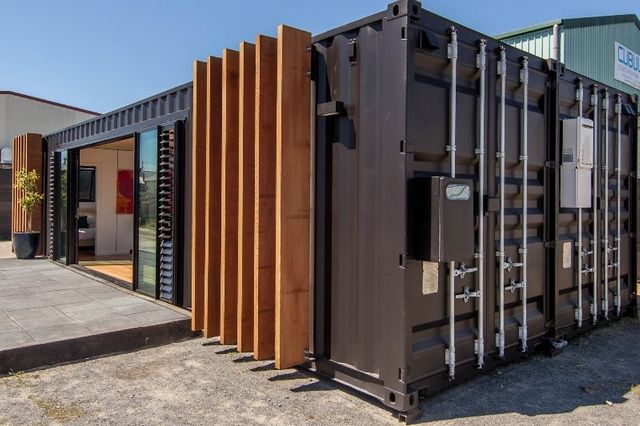
A complete container home from Safe Room Designs — including all appliances, solar power, HVAC, flooring, cabinetry, and delivery — typically runs $35,000 to $180,000+ depending on size and customization. That covers the entire build. Site preparation, utility connections, permits, and foundation are additional costs that vary by location.
For a 2-bedroom, 40-foot container home with premium finishes, solar upgrade, roof deck, and full appliance package, expect to spend $80,000 to $130,000 for the structure — plus $15,000 to $40,000 for site work.
Traditional Home Costs
The US median cost to build a new traditional home in 2026 is approximately $290,000 to $400,000 for a typical 1,500 to 2,000 sq. ft. home, depending on location and finishes. In high cost-of-living areas like California, New York, or coastal Florida, that number climbs well above $500,000.
Traditional builds also carry financing costs across a longer build period — 6 to 18 months of construction loan interest can add $10,000 to $30,000 to the total project cost before you even move in.
Build Time
Container Homes
Factory-built container homes are completed in a controlled environment, largely independent of weather. Most Safe Room Designs builds are completed in 8 to 14 weeks. Delivery and site placement typically take one to two days. You can be in your home months before a traditional build would even be framed.
Traditional Homes
Site-built construction depends on weather, subcontractor availability, permit delays, and supply chain timing. Six months is optimistic; twelve months is common; eighteen months or more happens more than buyers expect. Every month of delay is a month you’re still paying rent or a construction loan.
Read Also: The Complete Guide to Buying a Shipping Container Home in 2026
Durability and Maintenance
Container Homes
Corten steel is engineered to last. It doesn’t rot, warp, attract termites, or blow apart in high winds the way wood can. Several of our Gulf Coast customers have lived through major hurricane seasons without structural damage. The main long-term concern in salt-air coastal environments is surface rust — addressable with proper coatings and annual inspection. A well-maintained container home will outlast most wood-frame houses.
Traditional Homes
Wood-frame construction requires ongoing maintenance: repainting, re-roofing every 20 to 25 years, treating for termites, managing moisture intrusion, and replacing materials that wear or rot over time. These costs add up significantly over a 30-year ownership period.
Financing
Container Homes
Financing depends on how the home is classified. Container homes on permanent foundations that meet local residential building codes can qualify for conventional mortgages, FHA loans, and USDA rural housing loans. Container homes classified as personal property or on temporary foundations are typically financed through personal loans or chattel mortgages. We work with Monevo to offer multiple financing pathways.
Traditional Homes
Traditional homes on permanent foundations qualify for the full range of conventional mortgage products. This is the most mature financing market and typically offers the lowest long-term interest rates for qualified buyers.
Customization
Both options offer extensive customization. The key difference is when and how customization happens. Container homes are fully specified before production and arrive move-in ready — your choices are locked in during the design phase. Traditional homes are customized throughout the build, with more opportunity for changes mid-construction (though changes mid-build always cost more).
Safe Room Designs offers more than 40 named models and unlimited custom floor plan options. Exterior cladding, interior finishes, layout, appliances, solar, HVAC, roof deck — all fully configurable.
Which Is Right for You?
Choose a container home if: you want to move in faster, have a tighter budget, value durability and low maintenance, want an eco-friendly option with solar, or need something delivered to a remote or unconventional site.
Choose traditional construction if: you need the widest financing options, are building in an area with strict zoning that limits container homes, or want the most conventional resale market.
Many of our buyers aren’t choosing between these options because container homes are cheaper. They’re choosing container homes because they genuinely prefer the durability, the speed, the customization process, and the character of a steel-built home.
Frequently Asked Questions
Q: Do container homes hold their value like traditional homes?
Yes, particularly in markets where alternative housing is well-established. Container homes appreciate with the broader real estate market, and their durability means lower depreciation from wear and maintenance issues. In some markets — particularly for vacation rentals and short-term rental investments — container homes command premium pricing due to their uniqueness and character.
Q: Can a container home be built to the same square footage as a traditional home?
Yes. Multi-container builds combining four, six, or more containers can reach 2,000 to 3,000+ square feet. The footprint is achieved by combining containers side-by-side and end-to-end, with interior walls removed where desired to create open-plan living spaces.
Q: Is it harder to sell a container home than a traditional home?
It depends on your market. In areas where alternative housing is common and accepted, container homes sell well. In areas with strong buyer preference for conventional housing, the buyer pool may be smaller — but the uniqueness also attracts buyers willing to pay a premium. Short-term rental investors often seek container homes specifically.
Q: Which is better for the environment?
Container homes have a measurably smaller environmental footprint — less new material, less construction waste, smaller energy footprint, and our standard solar power system reduces grid dependency. For eco-conscious buyers, this is frequently the deciding factor.
Ready to Compare Models for Your Specific Budget?
Browse over 100 models at saferoomdesigns.com or request a free quote today.


Recent Blog Posts
-

-
-
-
How to Choose the Right Tiny Home Builder
05-08-2026
-
-
-
-
-
-
How Much Does a Tiny Home Really Cost?
22-07-2026